
Simple Interest Calculator
Free Online Finance Calculator
Quickly calculate simple interest on any loan, deposit, or investment — just enter your principal, rate, and time to get instant, accurate results.
Use the calculator
Calculate Your Simple Interest Instantly
Use the calculator below to work out simple interest on a loan, deposit, or investment in seconds. Enter your principal amount, annual interest rate, and time period, then hit calculate to see your interest earned or owed, along with your final balance — no spreadsheets or manual formulas required.
Zorvo Tools · Simple interest calculated on the outstanding balance only
Try the Simple Interest Calculator
<div style="max-width:100%;margin:0 auto;text-align:center;">
  <iframe
    src="https://zorvotools.com/
https://zorvotools.com/
simple-interest-calculator/"
    width="100%"
    height="650"
    style="border:1px solid #D8DEE3;border-radius:12px;max-width:600px;"
    loading="lazy"
    title="Simple Interest Calculator With Extra Payments">
  </iframe>
  <p style="font-size:13px;color:#555;margin-top:8px;">
    Calculator by <a href="https://zorvotools.com
/https://zorvotools.com/
simple-interest-calculator/" target="_blank" rel="noopener">Zorvo Tools – Simple Interest Calculator</a>
  </p>
</div>
How to Use
How to Use the Simple Interest Calculator
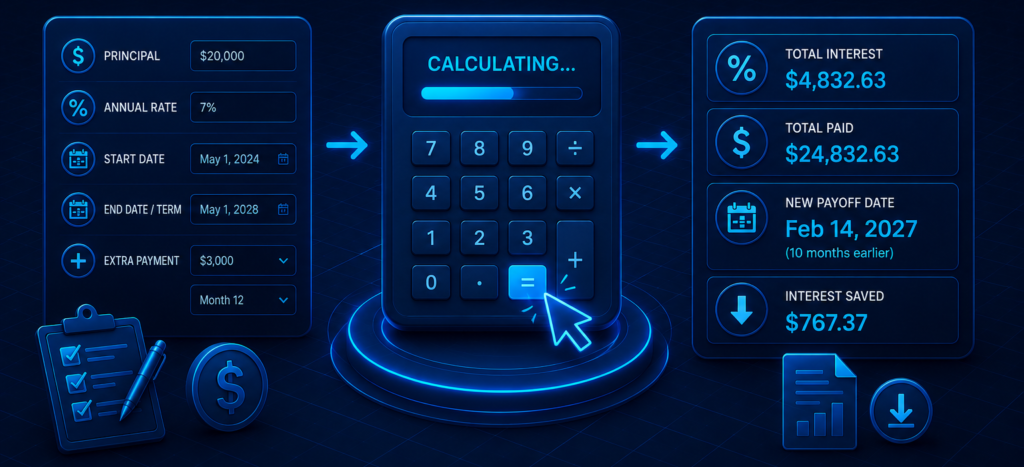
Getting an accurate simple interest figure takes less than 10 seconds with this tool. Just follow the three steps below and your result — along with the total payable or receivable amount — will appear instantly on screen.
Enter your values:
Type in the principal amount, the annual interest rate, and the time period (in years, months, or days).
Click Calculate:
The calculator instantly applies the simple interest formula behind the scenes.
Get your results:
View your total interest earned or owed, plus the final amount, displayed clearly on screen.
Result Explanation
Understanding Your Simple Interest Result
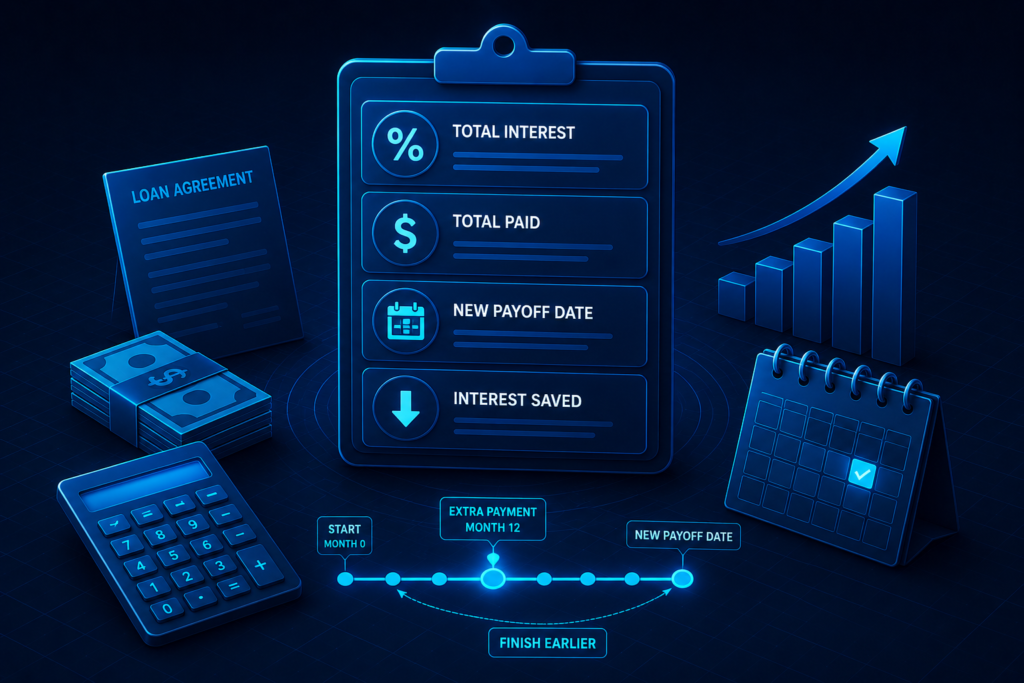
Once you calculate, the tool shows you two numbers: the <strong>interest amount</strong> (how much extra money is earned or owed) and the <strong>total amount</strong> (your principal plus that interest). Unlike compound interest, simple interest is only ever calculated on the original principal — it never earns “interest on interest.
Example: If you deposit $5,000 (principal) at a 5% annual interest rate for 3 years, your simple interest calculator will show:
- Interest earned: $750
- Total amount: $5,750
In the US, this type of calculation is common for personal loans, car loans, and short-term certificates of deposit (CDs). In the UK, banks and lenders often reference the AER (Annual Equivalent Rate) for savings products, though simple interest itself is more commonly used for personal loans, invoices, and short-term lending agreements rather than everyday savings accounts.
Formula / Method
Simple Interest Formula Explained
This calculator uses the standard simple interest formula, one of the oldest and most widely taught formulas in finance. It’s straightforward because the interest amount stays fixed every period — it doesn’t compound.
| Formula | Where | Meaning |
|---|---|---|
| I = P × R × T | I | Interest earned or owed |
| P | Principal (starting amount) | |
| R | Annual interest rate (as a decimal) | |
| T | Time period (in years) |
Worked example: Principal = $10,000, Rate = 4.25%, Time = 2 years I = 10,000 × 0.0425 × 2 = $850 Total amount = $10,000 + $850 = $10,850
If you need daily interest instead of annual, the calculator automatically converts the rate using Daily Rate = Annual Rate ÷ 365, which answers common searches like “daily simple interest” or “how to calculate simple interest on loan” using a daily basis.
Who Uses This Calculator?
What Is a Simple Interest Calculator and How Does It Work?

FAQ
Frequently Asked Questions About Simple Interest
Here are quick, accurate answers to the most common questions people ask about calculating simple interest, principal amounts, and rate conversions.
What is the formula for simple interest?
The formula is I = P × R × T, where P is the principal, R is the annual interest rate (as a decimal), and T is the time in years.
How do I calculate simple interest on a loan?
Multiply the loan’s principal amount by the annual interest rate and by the loan term in years. The result is your total interest owed over that period.
How do you find the principal in a simple interest problem?
Rearrange the formula to P = I ÷ (R × T) — divide the interest amount by the rate multiplied by the time period.
How do I convert an annual interest rate to a monthly rate?
Divide the annual rate by 12. For example, a 6% annual rate becomes a 0.5% monthly rate under simple interest.
What is daily simple interest and how is it calculated?
Daily simple interest divides the annual rate by 365 to get a daily rate, then multiplies that by the principal and the number of days.
What does "add-on interest" mean?
Add-on interest is a method where the total interest is calculated upfront on the full principal and added to the loan balance before repayments begin, rather than being recalculated over time.
What's the difference between simple interest and compound interest?
Simple interest is always calculated on the original principal only. Compound interest is recalculated on the principal plus any previously earned interest, so it grows faster over time.
Is AER the same as simple interest?
Not exactly. AER (Annual Equivalent Rate) shows what a rate would be if interest compounded annually, so it’s mainly used to compare compounding savings products — not straightforward simple interest calculations.
How do I find the interest rate if I know the interest and principal?
Use R = I ÷ (P × T) — divide the interest by the principal multiplied by the time period.
Can I use this calculator for both loans and savings?
Yes. The same formula applies whether you’re calculating interest owed on a loan or interest earned on a simple-interest savings product or investment.
Disclaimer
Results from this Simple Interest Calculator are for informational purposes only and should not be treated as financial or legal advice. Always confirm exact figures with your bank, lender, or a qualified financial advisor before making decisions. Read our full Disclaimer Page for more details.